
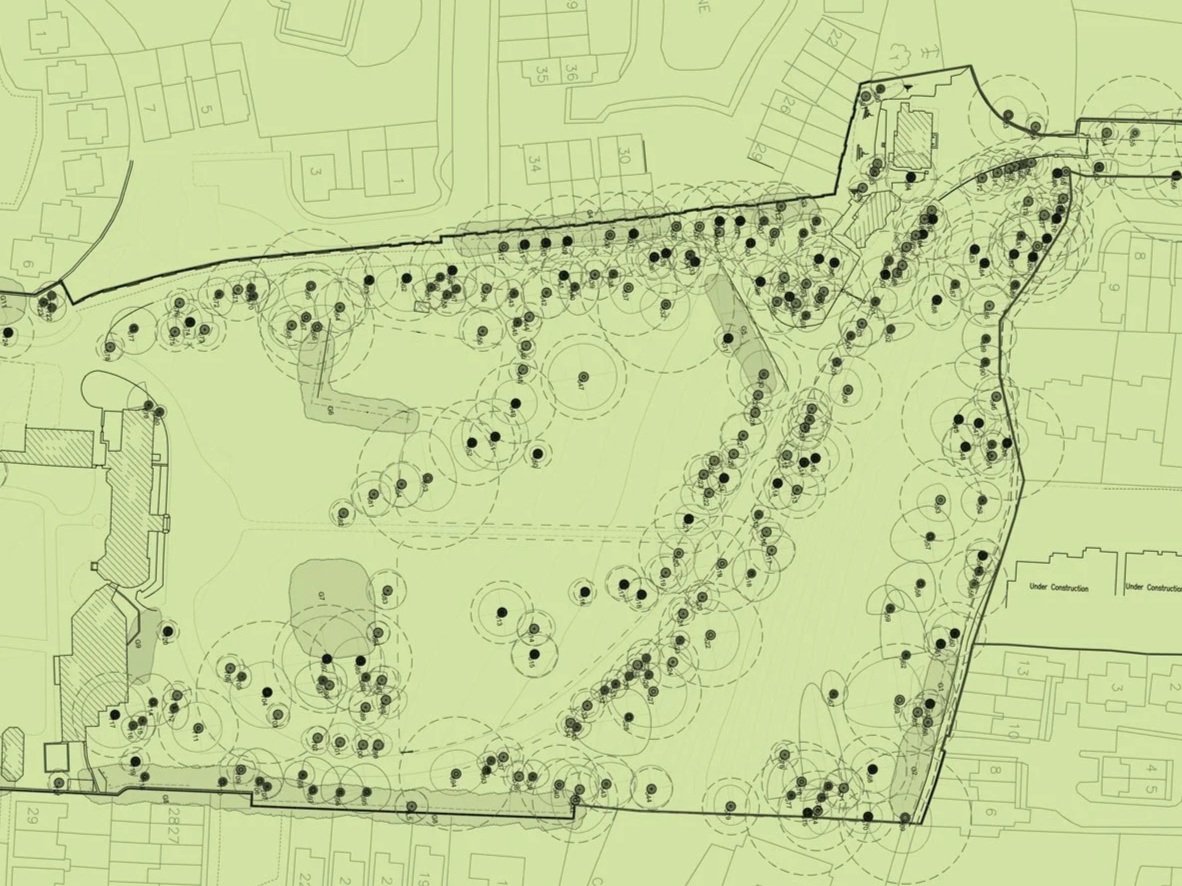
Tree Survey to BS 5837
LCA is a multidisciplinary firm of Consultant Arborists and Landscape Architects who specialise in guiding our clients through the planning and construction process in Ireland. If your development site has trees on it or even adjacent to it, engaging L.C.A before a request for further information will drastically reduce the probability of costly delays, re-designs or even outright refusal of permission.
After 30 years in the industry, the team at L.C.A are expert in providing all of the surveys, reports and drawings required by local authorities in Ireland to ensure that your build is compliant with all of the relevant tree protection strategies and county development plan objectives.
In Dun Laoghaire Rathdown for example, Policy 9 of The Trees and Urban Forestry Strategy states “An Arboricultural Report is required for any planning application where there are trees, shrubs or hedges on site or outside the boundary within 20m of any construction works” Therefore any planning application submitted without an Arborists Report is sure to be refused or delayed considerably by requests for further information.
Engaging the team at L.C.A. to carry out a Tree surveys in accordance with, BS 5837: 2012 | Trees in relation to design, demolition and construction – recommendations is the best way to ensure cost effective and speedy planning approval.
Local authorities will insist that
“At the earliest stage of the application the applicant shall submit a comprehensive Tree Report, comprised of a detailed Tree Survey and Arboricultural Impact Assessment, Tree Constraints Plan, Tree Protection Plan and Arboricultural Method Statement, all in accordance with, BS 5837: 2012 | Trees in relation to design, demolition and construction – recommendations. The report shall be prepared by a qualified Arborist and include a Tree Survey Plan & Schedule, Schedule of works, Tree Constraints Plan, Arboricultural Impact Assessment, Tree Protection Plan, Arboricultural Method Statement. It is strongly suggested that this information is obtained prior to any detailed design plans being drawn up so it can inform the design and layout. This will help to retain trees and hedgerows of value on site.”
Leinster Consultant Arborists can achieve Planning Approval Quickly and Cost Effectively.
Tree surveys in accordance with, BS 5837: 2012 | Trees in relation to design, demolition and construction – recommendations.
Tree Reports, comprised of a detailed Tree Survey and Arboricultural Impact Assessment, Tree Constraints Plan, Tree Protection Plan and Arboricultural Method Statement.
Tree Constraints Plan: a scaled master site plan @1:500
Arboricultural Impact Assessments
Arboricultural Method Statements
Tree Protection Fencing and Ground Protection Specifications.
Detailed specification of works in accordance with BS 3998:2010.
What We Offer
Tree Surveys fall into two general categories.
Tree survey in accordance with BS 5837
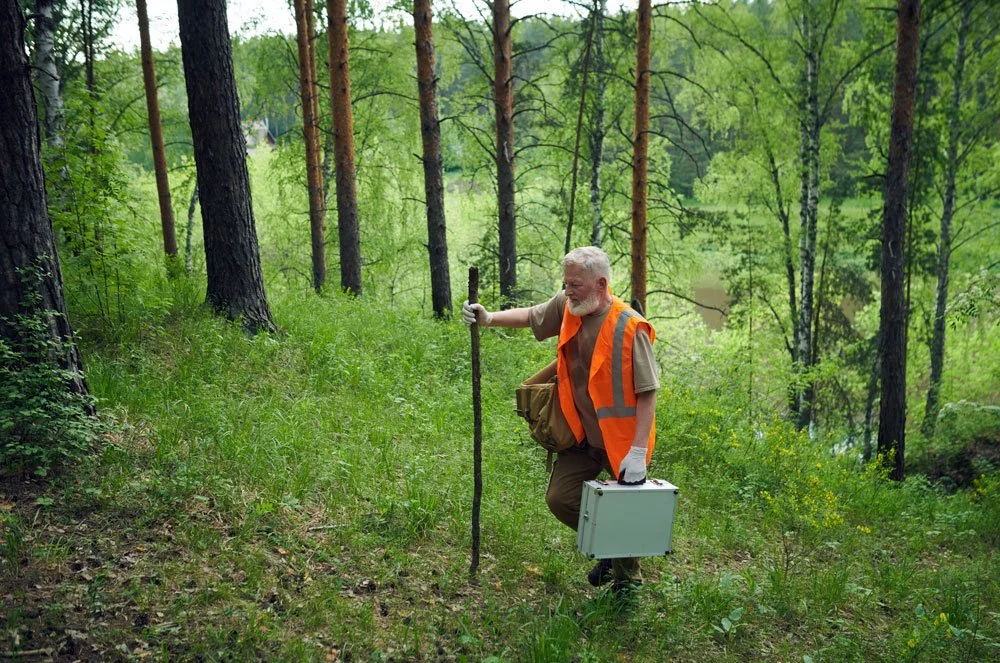
A full Tree Survey in accordance with BS 5837 including Tree Constraints/Protection Plan shows the impact on the trees of any proposed development and includes a Tree Survey Report describing the impact and prescribed mitigation measures.
A basic tree survey
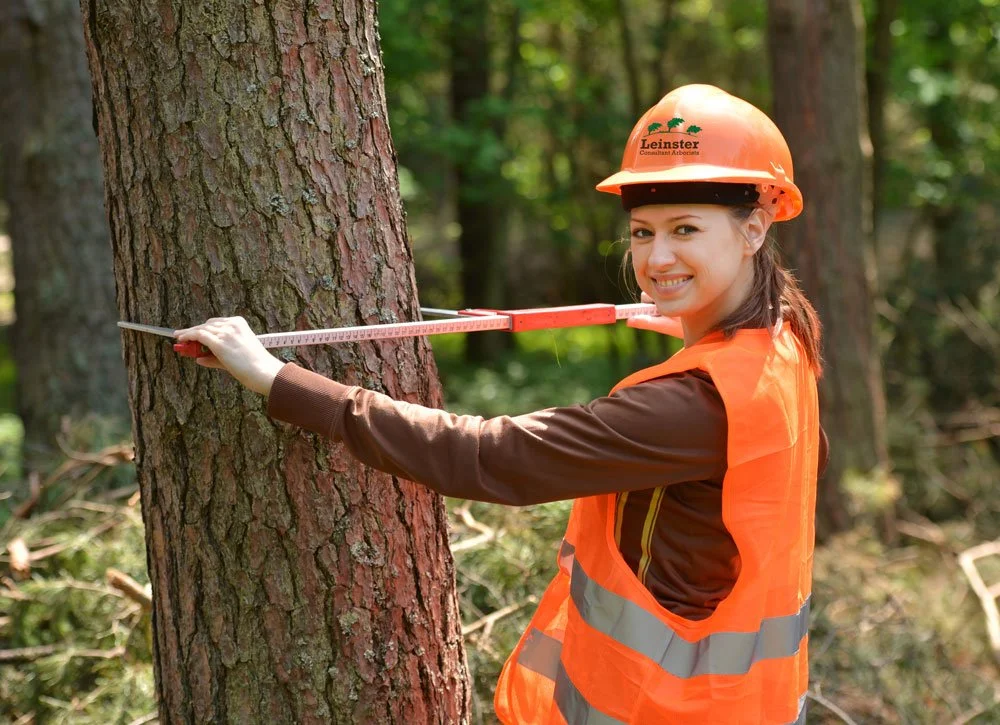
A Basic Tree Survey is often commissioned to manage the trees in a landscape. Recording information such as metrics, condition, potential risks, estimated remaining contribution and management recommendations.
We have decades of experience working with all stakeholders in the industry in Ireland, local government and regulatory bodies. We know from the start the criteria which will allow your application to gain approval first time.
Our intimate knowledge and in-depth understanding of the current regulations and local authority objectives make Leinster Consultant Arborist the perfect partners to advance your construction project quickly while safeguarding our environment for future generations.
A full Tree Survey as part of the Initial Site Survey.

A prudent and experienced developer will commission a Full Tree Survey in accordance with BS 5837 for their proposed development in advance of any request from the local authority. This is best done in the first phase of the development alongside the topographical survey. This will identify any potential constraints and avert costly changes in the scheme layout. This will save a vast amount of time in the planning process as the local authority will more often than not, request this of an applicant in a further information request.
At Leinster Consultant Arborists we have worked with every kind of client. From a homeowner seeking to build or extend a one off dwelling to international investment companies working with diverse professionals as a design team to develop large tracks of our capital to deliver hundreds of housing units and mixed use developments for our thriving nation.
A BS 5837 Tree Survey is an essential early stage of any development, helping projects progress efficiently while protecting important tree assets. Its purpose is to strike a careful balance between development requirements and the preservation of trees, which offer significant visual, environmental, and ecological benefits. The survey delivers detailed information on the trees within or adjacent to a site, including their species, dimensions, maturity, condition, and estimated remaining contribution. Our specialists also evaluate each tree’s structural health, checking for evidence of disease, decay, or pest activity. In addition, the root protection area is identified — this defines the zone around a tree that should remain undisturbed during construction — allowing you to plan with confidence, minimise risk, and move your development forward quickly.
What does a BS 5837 Tree Survey involve?
An initial tree survey examines all trees located on or adjacent to a proposed development site, recording key details such as species, dimensions, health, age, and anticipated longevity. Each tree is then assigned a category (A, B, C, or U) to reflect its overall quality and contribution, and its Root Protection Area (RPA) is calculated to inform and influence the site layout and design. This can be exceptionally valuable if the tree survey is commissioned before the final site layout is drafted. Our team can then work with the design team to deliver the most efficient and successful planning application.
The findings are presented within a Tree Constraints Plan, which identifies existing trees and highlights the limitations they place on the development proposals. The accompanying report may set out recommended tree protection measures, including protective fencing or specialist construction methods, alongside any necessary pruning or removal works. It will also evaluate the potential effects of the development on retained trees and outline appropriate mitigation measures to reduce impacts where required.
Our Landscape Architects
provide another layer of Planning and Design Expertise
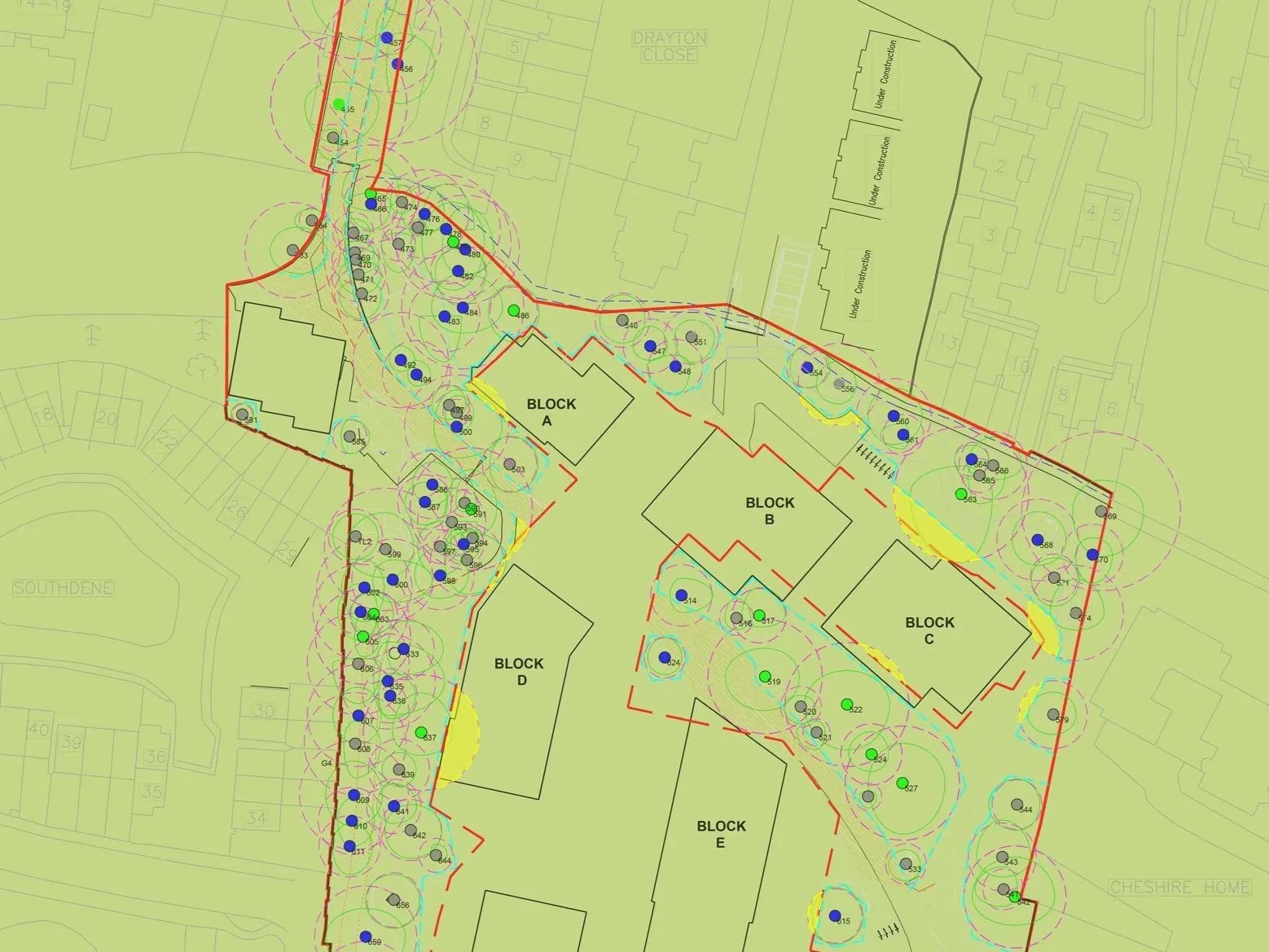
Once the survey work is complete, we prepare a comprehensive report for submission to the local planning authority. This typically includes a Tree Constraints Plan (TCP) and accurate AutoCAD drawings of the site. Together, these documents demonstrate how the proposed development has been designed with tree retention in mind and ensures compliance with relevant planning requirements.
For larger or more complex schemes, an Arboricultural Impact Assessment (AIA) identifying root protection areas and tree loss and a Tree Protection Plan (TPP) are often required. This later document sets out clear and practical measures for safeguarding trees throughout the construction phase. These may include the establishment of protective exclusion zones, detailed root protection methods, and the use of specialist construction practices to minimise the risk of damage. The TPP may form a key part of the planning submission, showing that appropriate steps have been taken to protect retained trees on site.
In some instances, usually for larger projects, arboricultural involvement continues beyond the planning stage. Our clients may request ongoing Supervision of Implementation and Management of the TPP during construction works. Our team can then complete Sign Off if required. This can include monitoring tree condition post-development, ensuring protection measures remain in place, and specifying replacement planting where trees have been removed or adversely affected. Our experienced Consultant Arborists and Landscape Architects support these ongoing requirements, producing Landscape Plans and Planting Plans and helping to ensure trees are properly cared for well beyond project completion.
“I am a senior ecologist working for a multidisciplinary team of environmental engineers. I have collaborated with the team at Leinster Consultant Arborists on a number of very high profile projects. I have always found them to be excellent. They bridge the divide between ecological and arb. expertise and the planning and construction worlds. We have not found another firm who can provide the expertise that L.C.A can provide. I would wholeheartedly recommend them for any project big or small.”
– Patrick O'Shea, Roughan & Ó Donovan, Consulting Engineers
Specialist Tree Removal
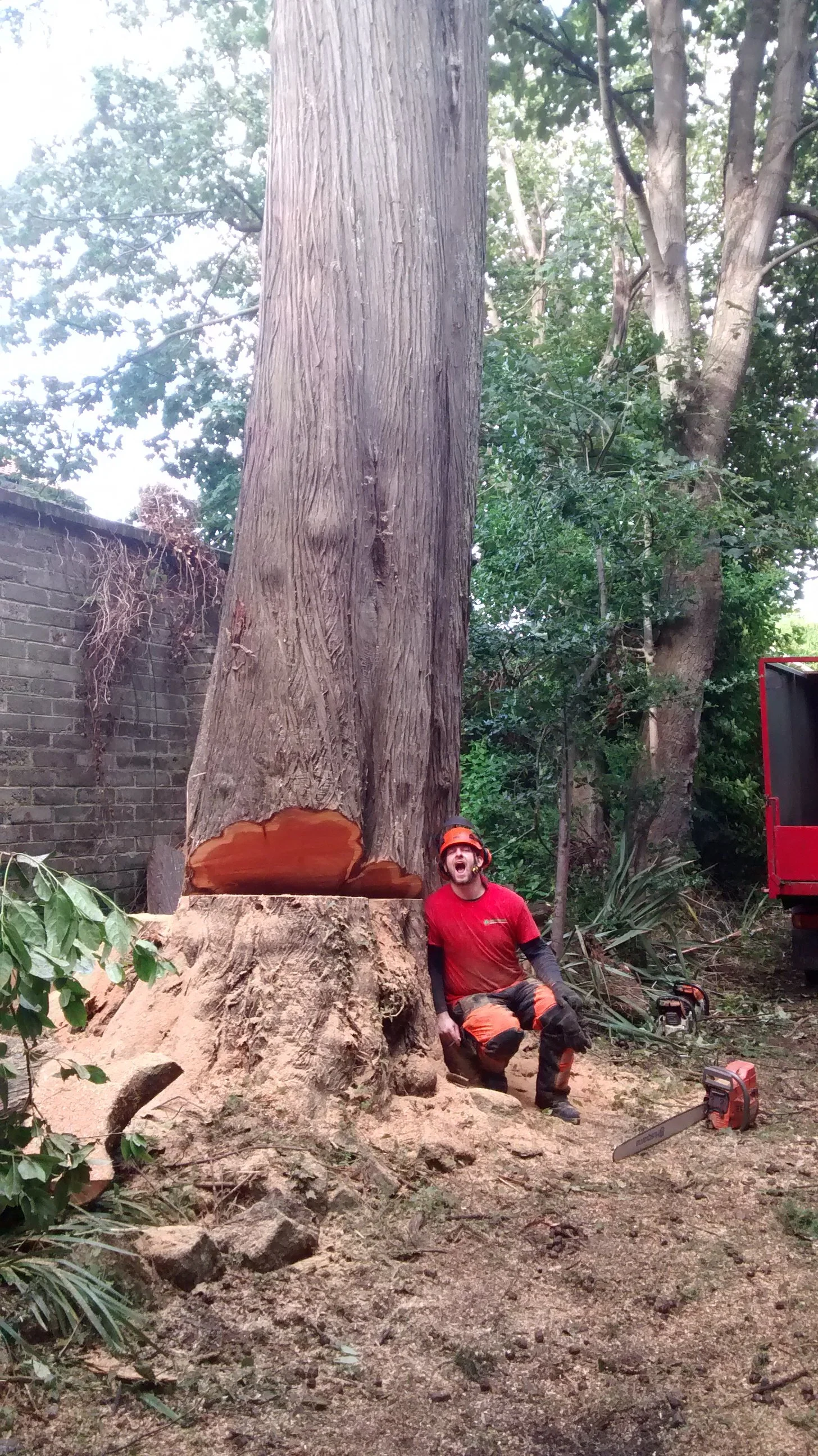
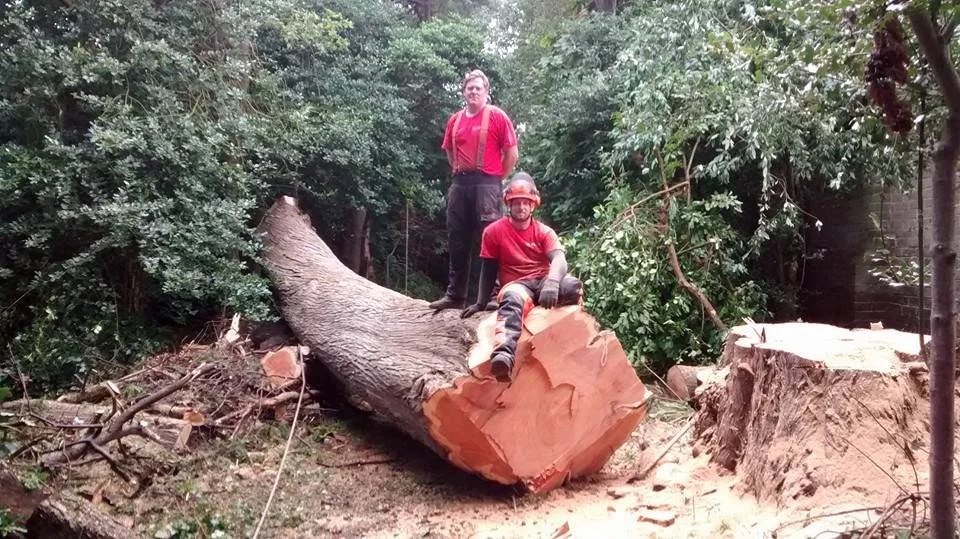
This venerable old tree in excess of 200 years old and 100 feet high was a beautiful old specimen but sadly had gone into decline and began shedding large heavy boughs near a school playground and so had to be removed.
The tree was a Cupressus Macrocarpa also known as a Monterey Cypress. Macro (big) Carpa (body) is a very appropriate name for the largest tree species commonly found in Ireland.
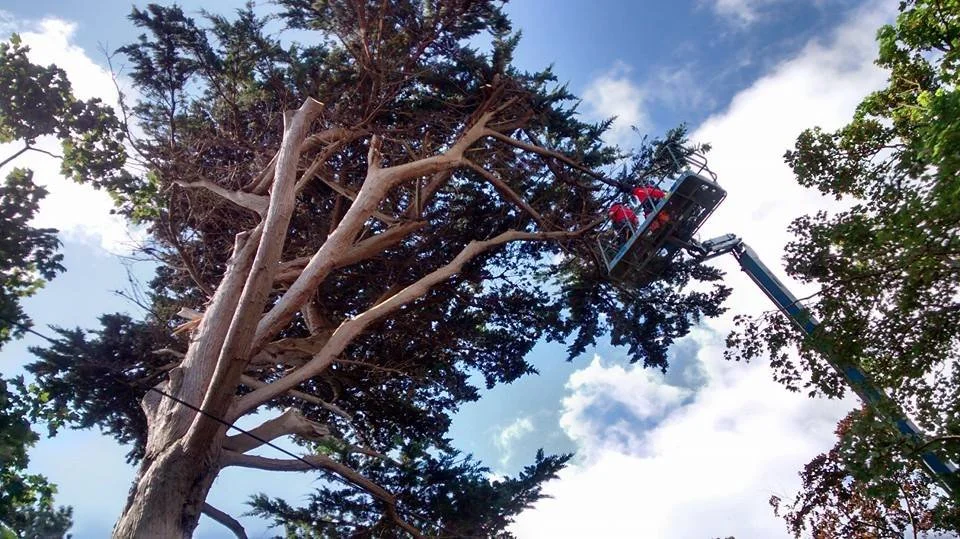
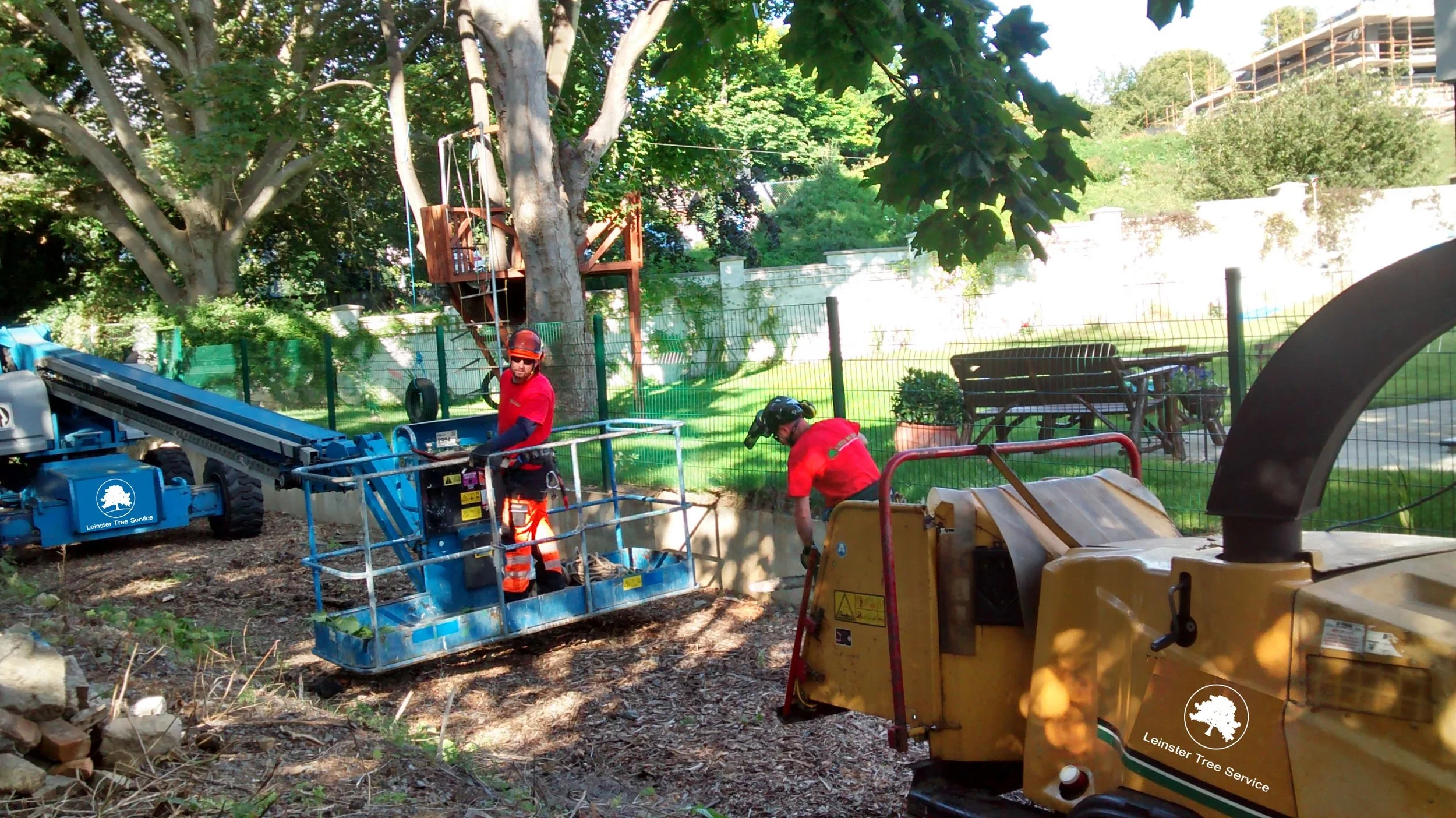
It was dismantled and removed by our expert arborists from a stately home on Killiney Hill in County Dublin.
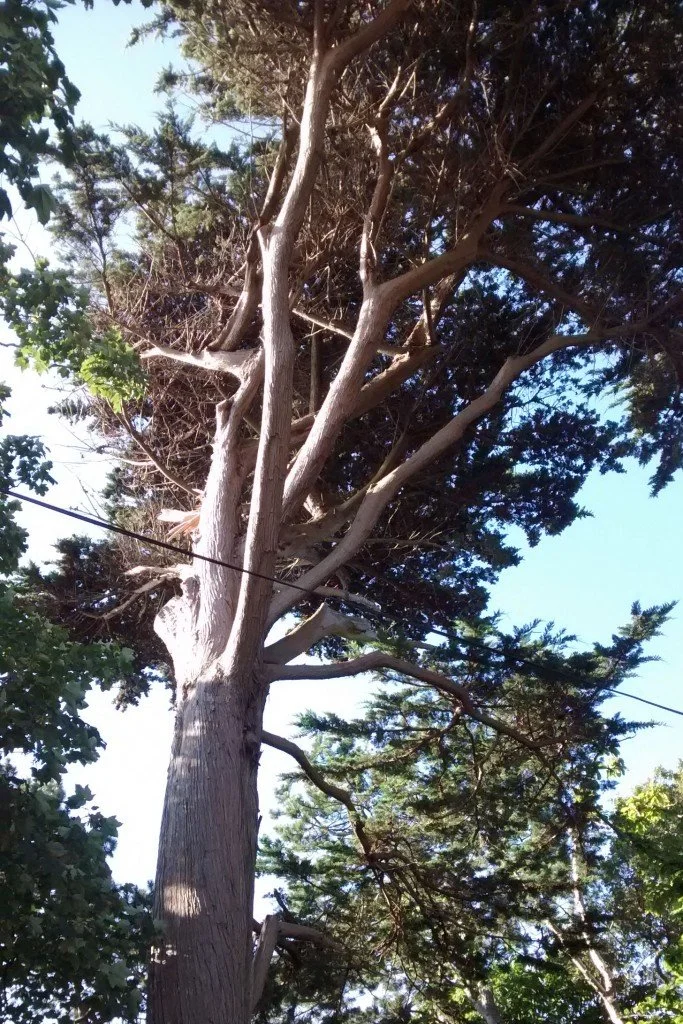
Our arborists used a specialist 100 foot hoist and state of the art rigging techniques and equipment to lower the branches safely to the ground.
The stem was then transported to a specialist sawmill in bray where it was milled into clapboards. The clapboards were then used to clad an architects design studio in the Dublin mountains.
Call us now on 01 272 1606 to discuss how we can help you. We will be delighted to provide a free no-obligation consultation.
Book a Free Consultation
Simply fill in your details and one of our experts will contact you promptly for a completely free no obligation consultation regarding your project and how LCA can help you achieve your goals.